
-
- For the Broth:
- 1/2 cup (120ml) extra-virgin olive oil
- 1 large yellow onion (12 ounces; 340g), diced
- 1 large leek (1 pound; 450g), washed of any grit and diced
- 1 medium fennel bulb (8 ounces; 225g), cored and diced
- 5 medium cloves garlic, crushed
- 1/2 teaspoon whole fennel seeds
- 2 large pinches saffron threads
- One (2-inch) strip zest from 1 orange
- Large pinch cayenne pepper or other red chili powder
- 2 sprigs thyme
- 2 tablespoons (30ml) tomato paste
- 6 plum tomatoes (1 1/4 pounds; 565g), cored, seeded, and diced
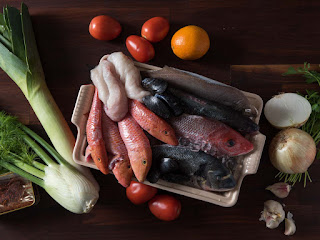
- 2 pounds (900g) whole fish or fish bones and heads (see note)
- 2 cups (475ml) dry white wine
- 1/4 cup (60ml) Pernod or pastis (optional)
- 2 quarts (1.9L) boiling water, or more as needed
- 2 sprigs fresh flat-leaf parsley
- 1 bay leaf
- Kosher or sea salt and freshly ground black pepper
- For the Rouille:
- 2 medium cloves garlic
- 1/4 cup crumbled stale bread or panko bread crumbs (1/2 ounce; 15g)
- Large pinch cayenne pepper or other red chili powder
- Pinch saffron threads
- 1 large egg yolk
- Kosher or sea salt
- 1/2 cup (120ml) extra-virgin olive oil
- To Finish:
- 3 to 5 pounds (1.3 to 2.25kg) mixed whole and/or filleted fish (see note)
- 1 pound (450g) mussels and/or crabs (optional; see note)
- Kosher or sea salt
- Baguette toasts, for serving
How to Make It
- Making bouillabaisse is somewhat similar to making a fish stock, like fumet, in that we cook the fish with aromatics to make a flavorful broth. But the similarities with fumet end there, since the idea with bouillabaisse is to make a creamy, cloudy, dare I say murky broth, not a clean and clear one. This means that unlike with a fumet, for which we cook the fish at the barest simmer to produce a clear stock, bouillabaisse is intentionally boiled hard. We want to emulsify the fish fats into the broth, for a creamier, more complex texture and flavor.
- And speaking of those fats, that’s another area where bouillabaisse differs from a fish stock. In a classic fish stock, we tend to use lean, white-fleshed fish for their delicate, pristine flavor. In bouillabaisse, we use a variety of fish, including oilier ones, because we want their darker, richer flavor.
- The broth in a bouillabaisse isn’t meant to be refined. It should be a little rough around the edges, with a texture that isn’t perfectly smooth and a flavor that is all depth and complexity, not lightness and clarity.
Leave a Reply